
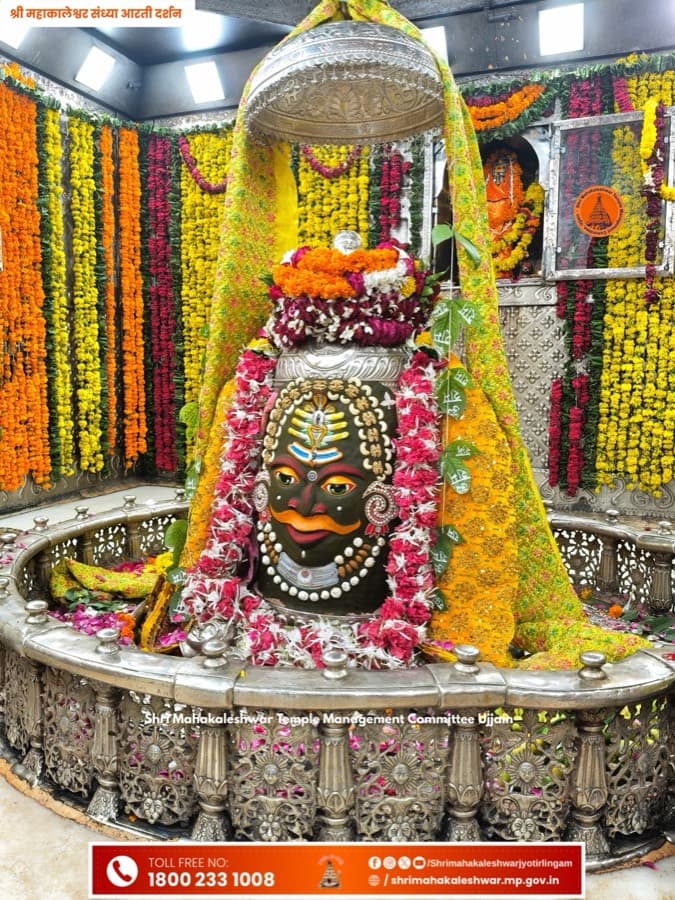
Divine Worship at the Jyotirlinga
Pujan & Abhishek at Mahakaleshwar UjjainRudrabhishek, Maha Rudrabhishek & Mahamrityunjay Jaap
Every puja type performed at the Shri Mahakaleshwar Jyotirlinga — with prices, meaning, best days, and simple booking help on one call.
Why Pujan at Mahakaleshwar
The Significance of Worship at the Dakshinamukhi Jyotirlinga
Among the twelve Jyotirlingas, the Shri Mahakaleshwar of Ujjain holds a unique place — it is Dakshinamukhi, the only Jyotirlinga facing south, the direction of Yama. Scriptures hold that worship offered here conquers the fear of death itself, which is why devotees travel across the world to perform Rudrabhishek and Mahamrityunjay Jaap in this very sanctum.
An Abhishek is the ceremonial bathing of the Shivling — with water, milk, Panchamrit (milk, curd, ghee, honey, and sugar), and bilva leaves — while priests chant Vedic mantras. A Pujanis the fuller worship built around it: sankalp (the devotee's stated intention), offerings of flowers, incense, and diya, the mantra recitations, and the concluding aarti. Together they form the most complete personal offering a devotee can make at the feet of Baba Mahakal.
All worship rituals and abhishekas at the temple are conducted at locations designated by the Shri Mahakaleshwar Temple Management Committee and strictly in accordance with established traditions — your puja is always performed by authorised temple priests, never by touts. This page lists every official puja type with its current fee, so you can choose with full clarity before you arrive.
Ujjain — ancient Avantika, one of the seven moksha-giving cities — has hosted this tradition of worship for thousands of years. Performing your sankalp where countless generations of devotees, sages, and kings have offered theirs adds a depth to the ritual that no other setting can match.
Puja Types & Prices
Mahakaleshwar Pujan & Abhishek Price List
Eight forms of divine worship are offered at the temple — from a simple General Puja to the grand Maha Rudrabhishek. All fees are set by the temple committee.
General Puja
Flowers, incense, diya and fruits are offered to Lord Shiva for peace and happiness in the family.
* Separate Sheeghra Darshan ticket required
₹100
Book by CallShivmahima Path
Recitation of the Shiv Mahima, praising the boundless greatness and glory of Lord Shiva.
* Separate Sheeghra Darshan ticket required
₹200
Book by CallRudrabhishek Vaidik Puja (1 Brahmin)
Abhishek of the Shivling with water, milk, and sacred offerings along with Vedic mantras chanted by a priest.
* Separate Sheeghra Darshan ticket required
₹300
Book by CallRudrabhishek Ekadashani (11 Avartan) — Shiv Mahimn Strot
Eleven rounds of chanting of the Shiv Mahimn Stotra to glorify Lord Shiva and invoke his blessings.
* Separate Sheeghra Darshan ticket required
₹500
Book by CallRudrabhishek (11 Avartan) — Rudra Patha (1 Brahmin)
Abhishek of the Shivling with Panchamrit, chanting of Rudram (Namakam & Chamakam) and Om Namah Shivaya.
* Separate Sheeghra Darshan ticket required
₹1,000
Book by CallLaghu Rudrabhishek (121 Paath)
Priests chant the Rudra 121 times while water, milk, and sacred items are offered on the Shivling.
₹3,000
Book by CallMaha Rudrabhishek
Grand Abhishek with continuous chanting of Rudram (Namakam & Chamakam) from the Yajurveda, Panchamrit, and bilva leaves.
₹15,000
Book by CallMahamrityunjay Jaap (1.25 Lakh Jaap)
Sava lakh (1.25 lakh) chants of the Mahamrityunjay Mantra for protection, healing, and long life.
₹15,000
Book by Call* As per temple rules, pujas from ₹100 to ₹1,000 require a separate Sheeghra Darshan ticket. All rituals are performed at locations designated by the Shri Mahakaleshwar Temple Management Committee, strictly per established traditions. Fees may be revised by the committee.
Understanding the Rituals
Which Puja Should You Choose?
General Puja & Shivmahima Path — the simple offering
If this is your first visit or you simply wish to offer gratitude, the General Puja (₹100) covers the classic offerings — flowers, incense, diya, and fruit — for peace and happiness at home. The Shivmahima Path (₹200) adds the recitation of verses praising Shiva's glory. Both are short, heartfelt, and perfect for families with children or elders.
Rudrabhishek — the heart of Shiva worship
The Rudrabhishek is the most beloved offering at any Jyotirlinga. At ₹300, a temple Brahmin performs the Vaidik abhishek with water and milk; at ₹500 the Shiv Mahimn Stotra is chanted in eleven rounds; and at ₹1,000 the full Rudra Patha — Namakam and Chamakam from the Yajurveda — accompanies a Panchamrit abhishek. Devotees seeking relief from doshas, new beginnings, or blessings for family welfare usually choose one of these.
Laghu & Maha Rudrabhishek — the grand sankalps
For major life events — a marriage, a new venture, a long-held vow — the Laghu Rudrabhishek (₹3,000) has the Rudra chanted 121 times, while the Maha Rudrabhishek (₹15,000) brings continuous Yajurvedic chanting with a grand Panchamrit and bilva abhishek. These are day-defining ceremonies; plan your stay in Ujjain around them.
Mahamrityunjay Jaap — the shield of Shiva
The Mahamrityunjay Mantra is chanted sava lakh — 1.25 lakh — times (₹15,000) for protection, healing, and long life. It is traditionally offered for a family member facing illness, for recovery after hardship, or as a prayer for longevity. That this jaap is performed at the Dakshinamukhi Mahakaleshwar, the conqueror of death, gives it its extraordinary significance.
Inside the Ritual
What Happens During Your Abhishek — Step by Step
Your ceremony begins with the sankalp — the priest asks your name, gotra, and intention, and formally dedicates the puja on your behalf. This moment matters: it is the thread that ties the entire ritual to you and your family, so keep the names of everyone you wish to include ready.
Then the abhishek itself unfolds. Sacred substances are poured over the Shivling in sequence — water from the Kshipra, milk, curd, ghee, honey, and sugar (together the Panchamrit) — while the priest chants the mantras your chosen puja prescribes: the Shiv Mahimn Stotra, or the Rudram's Namakam and Chamakam in the Vedic swaras. Bilva leaves, flowers, chandan, and bhasma follow, each with its own meaning in Shiva worship.
The ceremony closes with aarti and prasad. You receive the blessed offerings to carry home, and most families take a few quiet minutes in the temple courtyard afterwards — the stillness after a Rudrabhishek at Mahakaleshwar is an experience devotees remember for years. A simple General Puja takes only a short while; a Maha Rudrabhishek or Mahamrityunjay Jaap can span several hours, so plan your day accordingly.
Before You Come
Preparing for Your Pujan — Practical Guidelines
What to Carry & Wear
- • Traditional attire is expected — dhoti-kurta or kurta pyjama for men, saree or salwar suit for women — especially for abhishek performed near the sanctum.
- • Carry ID proof for every adult; it is checked with darshan and puja tickets.
- • Puja samagri is arranged by the temple priests — you do not need to bring your own materials unless specifically advised.
- • Mobile phones are restricted inside the temple; use the free locker facilities and keep only your tickets with you.
Timing Your Day
- • Reach the designated puja location well before your slot — temple lanes take longer than maps suggest on busy days.
- • Mornings after the Bhasma Aarti rush are calm and ideal for an unhurried Rudrabhishek.
- • If elders are with you, note that the Mahakal Lok corridor walk adds distance — autos can drop you closer to the gates.
- • Keep the evening free: the Sandhya Aarti and the illuminated corridor complete the day beautifully.
The Complete Darshan
Pairing Your Pujan with the Bhasma Aarti
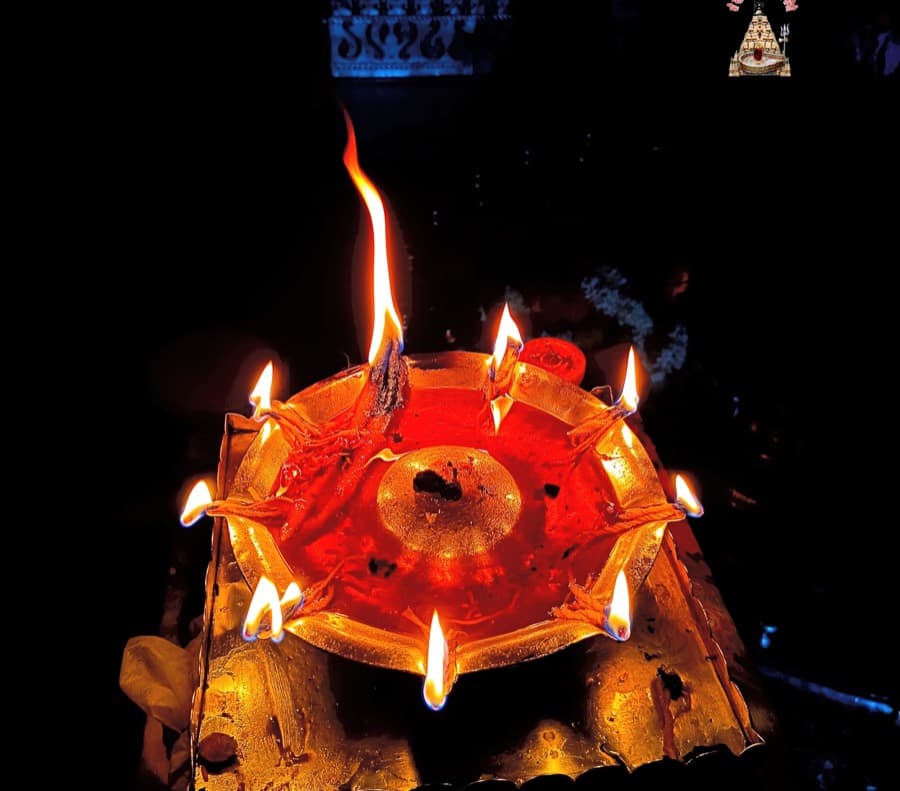
Many devotees combine their pujan with the temple's most famous ritual — the pre-dawn Bhasma Aarti, performed around 4:00 AM, when Baba Mahakal is adorned with sacred ash. Bhasma Aarti permission is issued through the temple committee's official booking system and is separate from the pujas listed above; our desk can explain the current process and timings when you call.
The classic plan looks like this: attend the Bhasma Aarti before sunrise, rest and breakfast at your room, perform your Rudrabhishek in the late morning, and spend the evening at Ram Ghat and the corridor. Staying at Shri Mahakal Bhakt Niwas makes this rhythm effortless — a 3:00 AM start is manageable when your bed is five minutes from the temple, with 24/7 hot water waiting when you return.
Auspicious Days
Best Days for Pujan & Abhishek in Ujjain
- Somvar (Monday): Shiva's own day — the most popular choice year-round.
- Shravan month: the holiest season; Shravan Somvars see the grandest crowds and the Sawari processions.
- Pradosh & monthly Shivratri: powerful tithis for Rudrabhishek sankalps.
- Mahashivratri: the night of Shiva — book well in advance, and reserve your room even earlier.
Simple Booking
How to Book Your Pujan — One Phone Call
- 1
Call our desk
Dial +91 90602 32099 and tell us which puja you wish to offer, your preferred date, and how many family members will attend.
- 2
We guide the official process
Pujas are booked through the temple committee's official system. We walk you through it, including the separate Sheeghra Darshan ticket needed for pujas up to ₹1,000.
- 3
Plan the timing
We help you pick a slot that fits your darshan plan — and advise reaching the designated location well before the muhurat.
- 4
Stay next door
Book your room at Mahakal Bhakt Niwas in the same call, so an early-morning puja never means a rushed journey.
Devotee FAQs
Pujan & Abhishek — Frequently Asked Questions
How can I book a Pujan or Rudrabhishek at Mahakaleshwar Ujjain?
The easiest way is to call our Ujjain desk at +91 90602 32099 with your preferred date, puja type, and the number of family members attending. We will guide you through the official process — pujas at the Mahakaleshwar Temple are conducted through the Shri Mahakaleshwar Temple Management Committee's system, at locations designated by the committee and strictly according to established traditions.
What is the cost of Rudrabhishek at Mahakaleshwar Temple?
Rudrabhishek Vaidik Puja by one Brahmin starts at ₹300. The 11-Avartan Rudrabhishek with Rudra Patha is ₹1,000, Laghu Rudrabhishek (121 Paath) is ₹3,000, and the grand Maha Rudrabhishek is ₹15,000. A General Puja starts at just ₹100. Prices are set by the temple committee and may be revised.
Do I need a separate darshan ticket for the puja?
Yes — as per temple rules, the pujas priced from ₹100 to ₹1,000 (General Puja, Shiv Mahimn Path, Rudrabhishek Vaidik Puja, Shiv Mahimn Strot, and the 11-Avartan Rudra Patha) require a separate Sheeghra Darshan ticket in addition to the puja fee.
Which is the best day for Rudrabhishek in Ujjain?
Mondays (Somvar) are considered most auspicious for Lord Shiva, and Shravan Somvars are the holiest of all. Pradosh, monthly Shivratri, Mahashivratri, and your own birth nakshatra day are also excellent choices. Book several days ahead for Shravan and festival dates.
Can the puja be performed in my name if I cannot attend?
Sankalp is traditionally taken with the devotee present, and attending in person is always recommended. If you cannot travel, call our desk — we will explain the current options available through the temple's official system for offering puja on a devotee's behalf.
Where can I stay when I come for Pujan or Abhishek?
Shri Mahakal Bhakt Niwas at Bharat Mata Mandir, Sandipani Parisar offers clean pilgrim rooms from ₹1,365 per night, about 5 minutes from the temple — ideal for early-morning puja timings. Call +91 90602 32099 to book your room along with your puja plan.
Keep planning: all Ujjain pilgrimage guides · Mahakal Lok corridor · things to do in Ujjain · how to reach Ujjain