
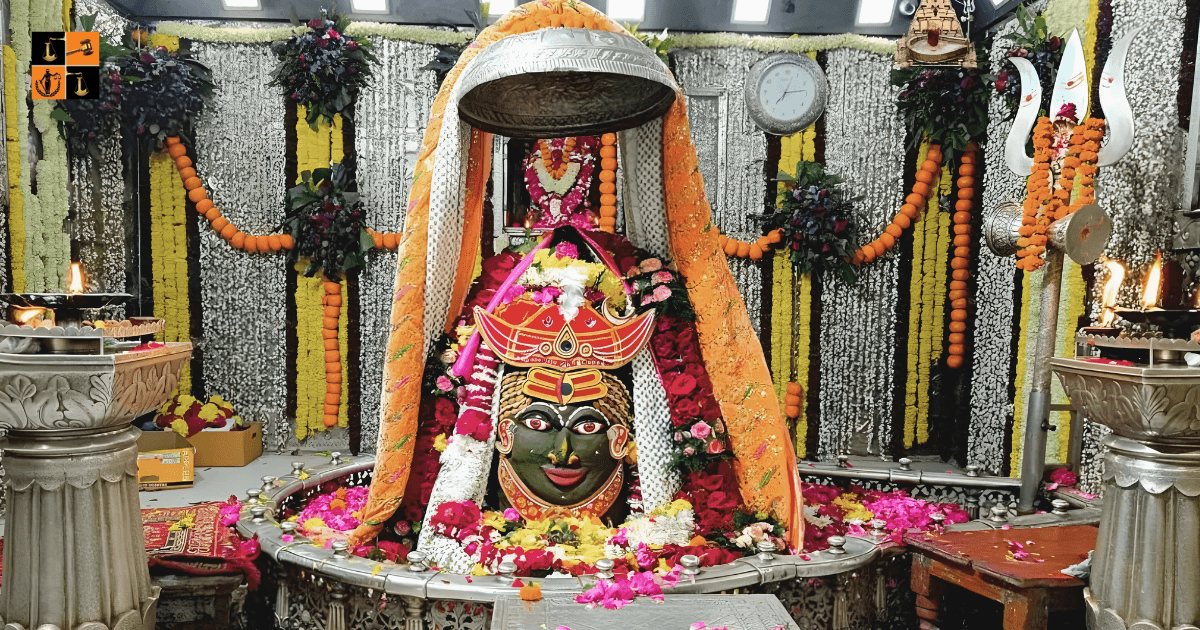
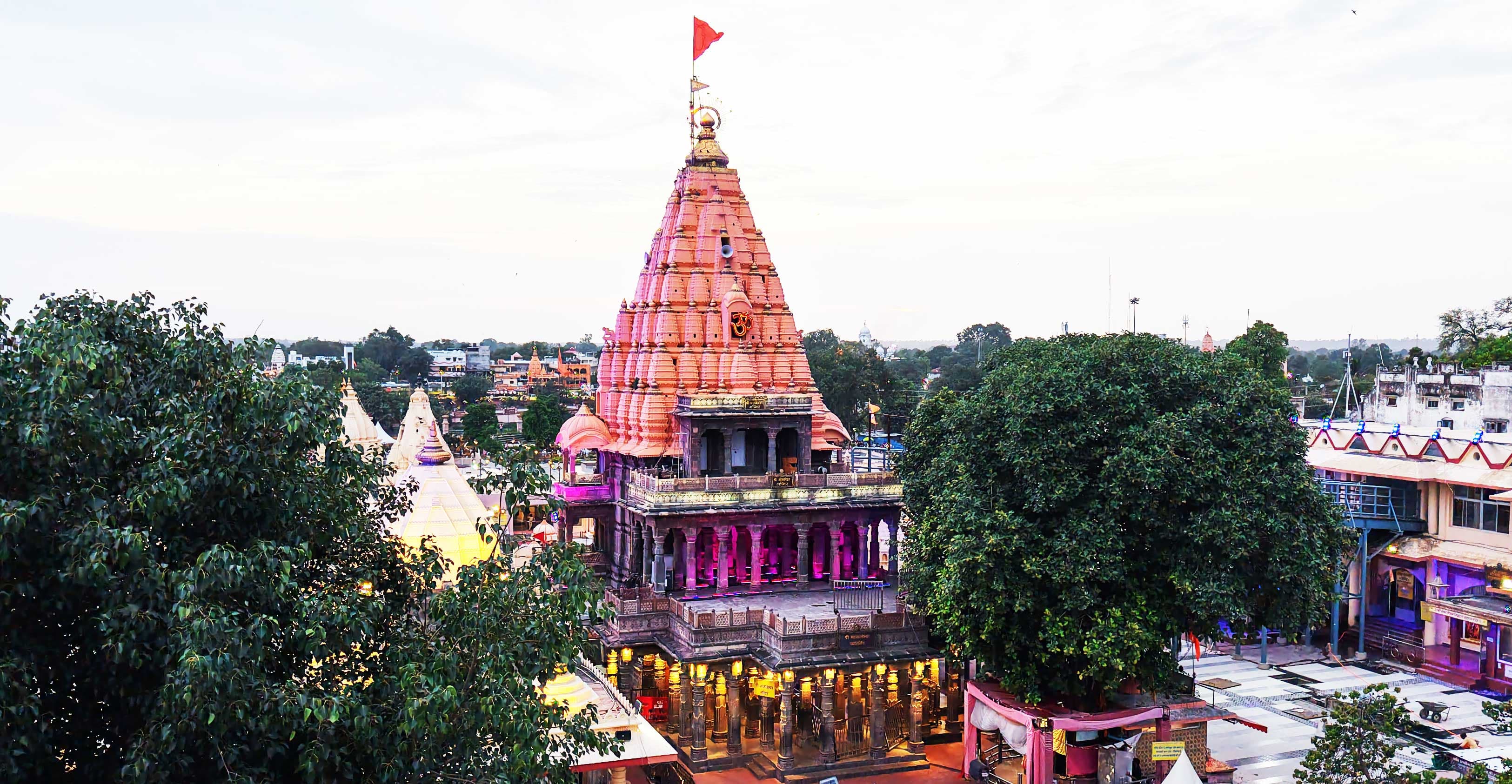
Mahakaleshwar of Ujjain is one of the twelve Jyotirlingas — the shrines where Lord Shiva is worshipped as a self-manifested pillar of light. Yet even among the twelve, Ujjain's Mahakal is singular: he is Dakshinamukhi, the only Jyotirlinga that faces south, and he is worshipped as the Lord of Time and Death itself — Mahakal. A well-loved saying captures it: for those under Mahakal's protection, even Kaal (time and death) can do nothing.
From the Shiva Purana
King Chandrasena and the Demon Dushan
The Shiva Purana tells of a time when Ujjain — then known as Avantika — was ruled by the pious King Chandrasena, a devoted worshipper of Lord Shiva. So deep was the devotional atmosphere of the city that even a young cowherd boy, Shrikhar, was drawn to join the king's worship. When rival kings and the demon Dushan, emboldened by a boon, attacked Avantika and began tormenting its Shiva devotees, the whole city cried out to Mahadev with one voice.
Moved by the prayers of his devotees, Lord Shiva burst forth from the earth in his fierce, resplendent Mahakal form and destroyed Dushan and his forces in an instant. When the devotees begged him to remain with them forever, the Lord agreed — and settled in Avantika as the Mahakaleshwar Jyotirlinga, the eternal guardian of Ujjain. To this day devotees regard Mahakal as the true king of Ujjain, whose rule stands above every earthly authority.
The South-Facing Lord
Why Mahakal Faces South
In Hindu tradition the south is the direction of Yama, the lord of death — a direction ordinarily avoided in worship. That the Mahakaleshwar Jyotirlinga alone faces south carries a profound message: here Shiva presides over time and death, not within them. Devotees therefore pray to Baba Mahakal for freedom from untimely death, from fear, and ultimately from the cycle of time itself.
Ujjain's connection with time runs deeper still. The city stands on the ancient prime meridian of Hindu astronomy, and for centuries it was India's centre of timekeeping — a legacy preserved at the historic Ved Shala observatory. The Lord of Time, seated in the city of time: for devotees, this is no coincidence.
The Sacred Ash
The Uniqueness of the Bhasma Aarti
In the still hours before dawn, the Mahakaleshwar Jyotirlinga is adorned with sacred ash in a ritual performed nowhere else among the Jyotirlingas — the Bhasma Aarti. The ash speaks the deepest truth of Shaiva devotion: everything that is born returns to ash, and only Mahakal, the Lord of Time, remains. Witnessing the aarti in the sanctum's lamplight is an experience devotees carry for a lifetime.
Attendance is limited and managed through the official Mahakaleshwar temple committee system — please check the official temple process and register well before your travel dates. Our team gladly guides guests on timings and logistics, though aarti booking itself happens only through the official channel. Staying close matters: reporting time falls in the small hours of the morning, and from the Bhakt Niwas the temple is about a 5-minute auto ride.
The Great Gathering
Simhastha Kumbh — When Ujjain Becomes the World
Ujjain is one of the four cities that host the Kumbh Mela — here called the Simhastha, held when Jupiter enters Leo (Simha). Sadhus, akharas and millions of pilgrims converge on the Shipra's ghats for the sacred bath, and the city around Mahakal becomes one of the largest spiritual gatherings on earth. Between Kumbhs, the same sanctity flows quietly at Ram Ghat and Ujjain's other sacred sites every single evening.
Experience Mahakal's City — Stay at the Bhakt Niwas
Reading the katha is the beginning; standing before Baba Mahakal is the darshan. Shri Mahakal Bhakt Niwas at Bharat Mata Mandir keeps you minutes from the temple, with clean pilgrim rooms from ₹1,365 and pure satvik meals.
Mahakaleshwar Katha FAQs
Why is Mahakaleshwar called the Dakshinamukhi Jyotirlinga?
Among the twelve Jyotirlingas, only Mahakaleshwar faces south — the direction associated with Yama, the lord of death. Devotees revere the south-facing Mahakal as the master of time and death itself, which is why worship here is believed to free one from untimely death and the fear of it.
What is the story behind the Mahakaleshwar Jyotirlinga?
The Shiva Purana relates that when the demon Dushan tormented Ujjain (ancient Avantika) and its Shiva devotees — among them the devout King Chandrasena — Lord Shiva burst from the earth in his fierce Mahakal form, destroyed the demon, and at the prayers of his devotees remained in Ujjain forever as the Mahakaleshwar Jyotirlinga.
What makes the Bhasma Aarti unique?
The Bhasma Aarti is performed in the early hours before dawn, when the Jyotirlinga is adorned with sacred ash (bhasma). It is performed only at Mahakaleshwar among the Jyotirlingas, symbolising that everything in creation ultimately returns to ash before the Lord of Time. Attendance is managed through the official Mahakaleshwar temple committee system — check the official process for slots.
What is the Simhastha Kumbh of Ujjain?
Ujjain hosts the Simhastha Kumbh Mela, one of the four great Kumbh gatherings, held when Jupiter enters the sign of Leo (Simha). Millions of pilgrims and sadhus gather to bathe in the sacred Shipra at Ram Ghat — one of the largest spiritual congregations on earth.
Where should I stay for Mahakaleshwar darshan?
Shri Mahakal Bhakt Niwas at Bharat Mata Mandir, Sandipani Parisar is about a 5-minute auto ride from the temple, with clean pilgrim rooms from ₹1,365 per night and satvik meals on site. Call +91 90602 32099 to book your darshan stay.